Pantheon P1 agency: Websites your team can change without breaking.
We design and build P1 sites and the component systems that keep every page on brand. We spoke at Pantheon’s /GoLive 2026, and we are P1 Charter Partners.
Talk to UsWhat P1 is
A governed way to build the web.
P1 is Pantheon’s AI-native web composition layer, built on the Pantheon Platform. Marketers, developers and AI agents build pages from the same React components, in protected workstreams, with checks before anything goes live. It is in a limited beta.
P1 is not Pantheon Content Publisher. Content Publisher turns Google Docs and Word files into site content, and P1 brings it in as one part of a larger system for creating and governing the site itself.
Pantheon describes P1 as an AI harness for website creation and governance. Read Pantheon’s own account at p1.pantheon.io (opens in a new tab).
What We Build
Four parts of a site that stays yours.
- Puck blocks with typed fields, sensible defaults and instructions for AI agents
- Brand rules built into the components, so pages stay on brand
- Accessible markup in every block, built to WCAG 2.2 AA
- Content models and data sources shaped around your organization
- Next.js and React front ends on the P1 SDKs
- Content written in Google Docs or Word brought in through Pantheon Content Publisher
- Migration planning for the pages that should move first
- An approved set of components and fields that editors and AI agents both build from
- Editor workflows in protected workstreams that merge into the live site
- Pre-publish checks for contrast, alt text and rich text on every page
- New blocks as your pages call for them
- Training for the editors who will use the system
- Fixes and enhancements as P1 itself matures
Our Approach
A governed system works when the components are right. We start there, with the blocks, the fields and the rules, and build the site on top.
The same team that designs the components builds the site and stays on after launch.
P1 Blocks
We built the parts library we wanted.
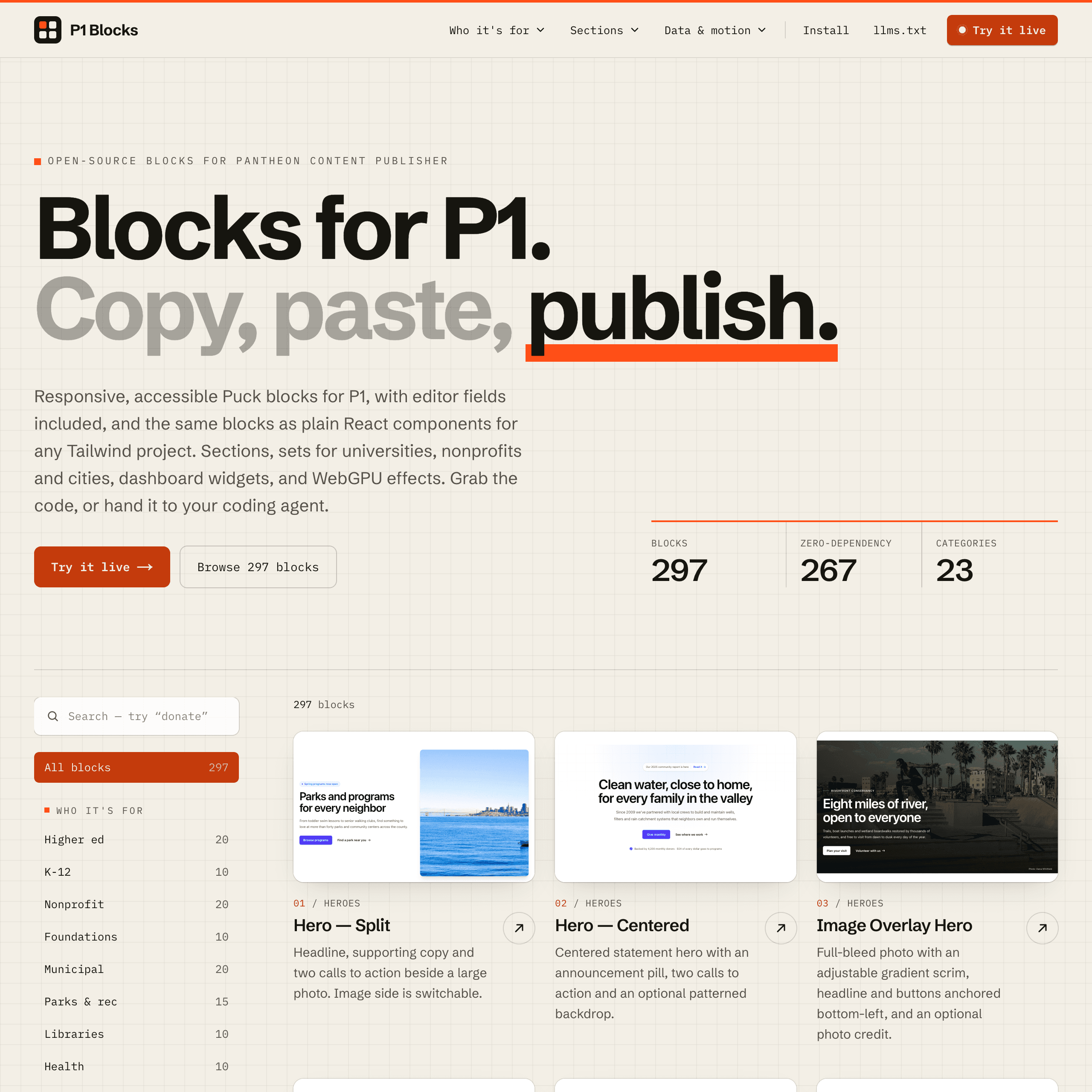
P1 Blocks is our library for P1. Every block comes as a Puck block for P1 projects and as a plain React and Tailwind component you can copy. A live editor lets you try them, and an llms.txt file lets coding agents install them.
It includes industry sets, dashboard widgets and WebGPU effects, with a CSS fallback. It is the clearest proof we can offer of how we think about components.
- 297
- Blocks
- 23
- Categories
- 2
- Editions: Puck and React with Tailwind
Charter Partner
Building on P1 from the start.
- P1 Charter Partners
- We are P1 Charter Partners, in Pantheon’s Charter Partner Program, the group of agencies building on P1 before it is generally available.
- /GoLive 2026
- We spoke at Pantheon’s /GoLive 2026 conference in Miami, October 6 and 7, where Pantheon introduced P1.
- Pantheon partner
- We are an accepted Pantheon partner.
How It Works
From first block to a site that holds.
Discover
We learn your organization, your editors and the pages that change most, then decide whether P1 fits and where.
Model the components
We define the blocks, fields and brand rules, so every page starts from parts that already belong together.
Build and migrate
We build the front end and move the content across, testing with assistive technology as we go.
Govern and support
We train your team, watch how the system is used, and add blocks as the site grows.
P1 checks contrast and alt text before a page publishes. We build the components to WCAG 2.2 AA, so those checks start from a sound base. See our accessibility services.
Related Work
Systems we’ve built.
P1 Blocks
We built P1 Blocks, a library of 297 responsive React and Tailwind blocks for P1, shipped as copy-paste components and Puck blocks with a live editor.

Conteur Élan
We built Conteur Élan’s brand and launch website, telling a storyteller’s bourbon through a cinematic Next.js experience with age verification, the Story Society membership, and a shareable storyteller hub.
GSP Airport
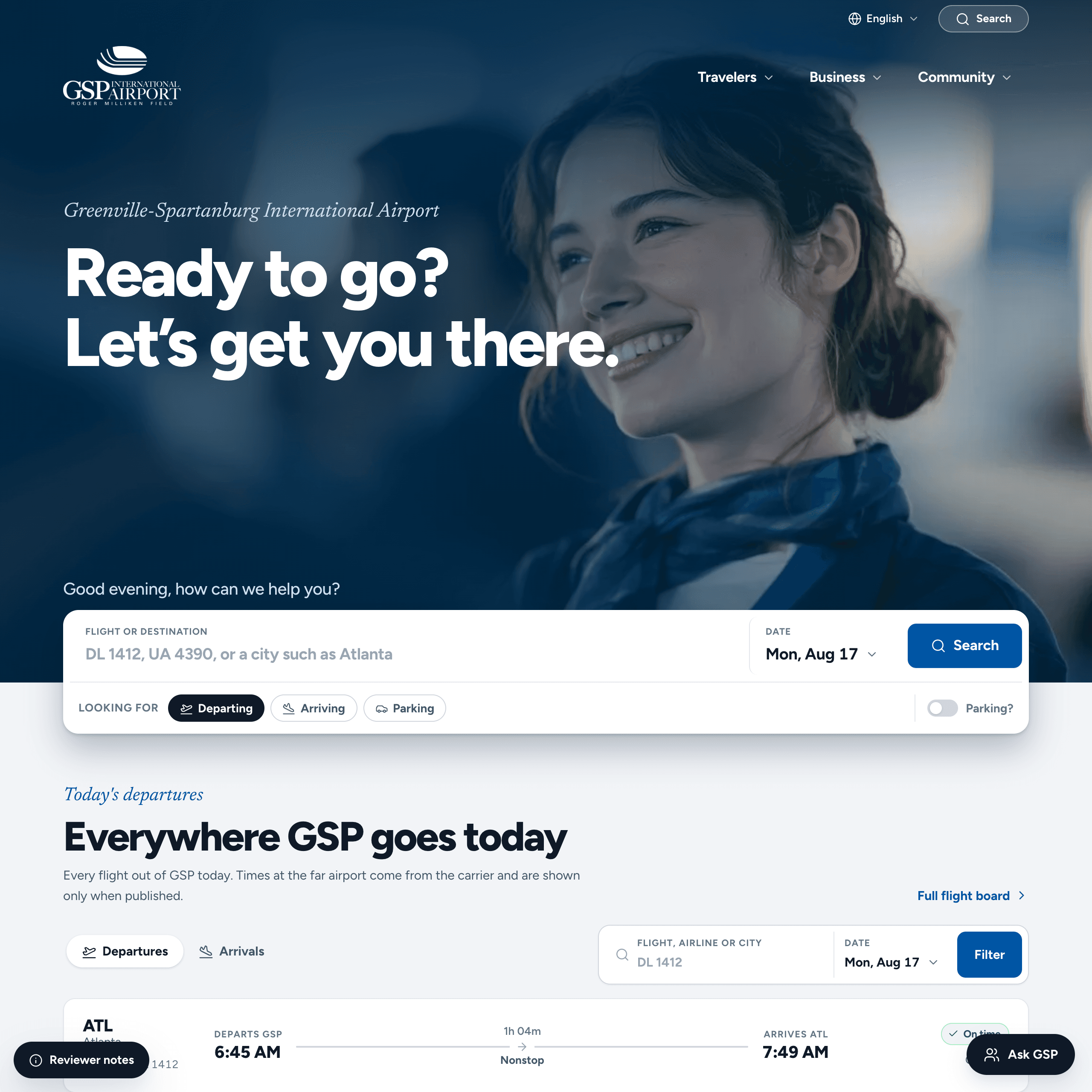
We designed and built a working concept for Greenville-Spartanburg International Airport’s website RFP, leading with flight status, a time-to-leave trip planner, parking booking and live fare search.
Culotta Law
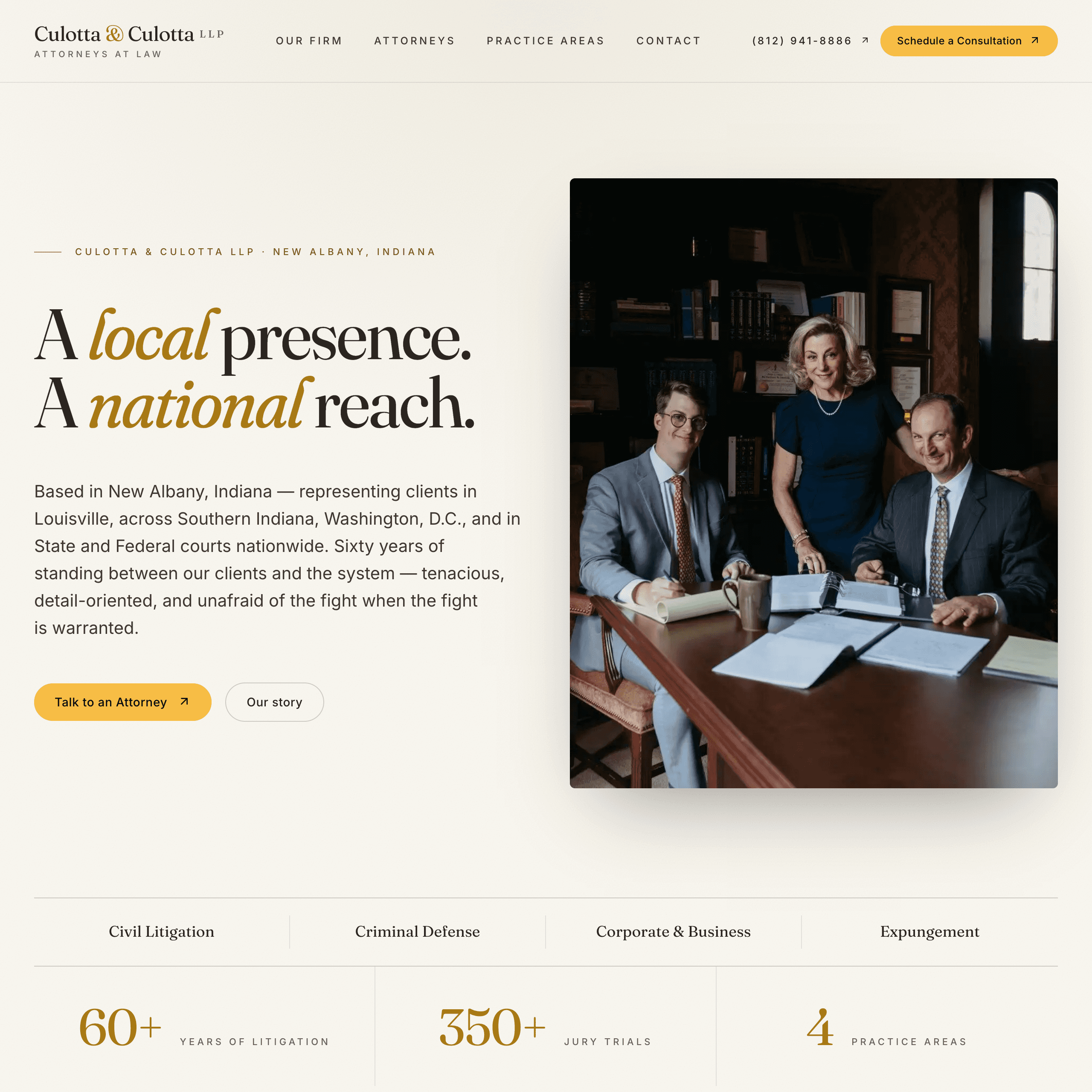
We designed and built an editorial Next.js site for Culotta & Culotta LLP that introduces three trial attorneys, four practice areas and six decades of courtroom experience.
Questions
Pantheon and P1, answered.
What is Pantheon P1?
Is P1 the same as Pantheon Content Publisher?
Is Prolific Digital a Pantheon partner?
What is the P1 Charter Partner Program?
Can my organization use P1 today?
What technology does P1 use?
What is P1 Blocks?
Thinking about
P1?
Tell us about your site and your team. We’ll say whether P1 fits, and what the first build should be.